
Finding Schaumburg Residents
A useful Schaumburg residents directory search begins with the item already known. An exact street address belongs first in an assessor or parcel map. A full name can be checked in a court party index, a professional license search, or a business filing. An older address belongs with deeds and the Schaumburg Township District Library's telephone books, yearbooks, newspapers, church records, and local-history files. Each record answers a narrow question. A parcel card identifies the assessed owner and property facts; it does not list every person in the home. A docket records a court event; it does not establish current residence.
Schaumburg spans Cook and DuPage Counties, so the county is not a minor detail. Confirm it from the parcel or PIN before opening a recorder, clerk, assessor, election, or court system. Search name variations and dates, then compare at least two identifiers such as a middle initial, address, parcel, filing date, or associated organization. Record a source URL and access date. This method creates a dated, verifiable trail without turning scattered public records into an unsupported household list.
- Enter the address in the correct Cook or DuPage assessor search and save the PIN.
- Use Illinois voter status tools only to confirm your own registration or another lawful, permitted inquiry.
- Follow the owner name and PIN into the correct county recording index.
- For an older trail, check the library's dated directories and local-history collections.
- If the online path ends, contact the custodian or submit an Illinois FOIA request for an identifiable public record.
Schaumburg Resident Records Offices
There is no single Schaumburg records counter. Cook County Clerk Recordings holds Cook deeds and related instruments after absorbing the former Recorder of Deeds in 2020. DuPage County Recorder keeps its own index, with searchable images beginning March 16, 1961. The two assessors maintain separate parcel systems, and the two circuit clerks maintain separate dockets. Village records such as permits, licenses, meeting material, police and fire records, and local administrative files remain with Schaumburg. The Schaumburg street directory explains the address route in full.
Two Counties, Two Record Trails
Schaumburg's civic identity crosses a records boundary. Cook and DuPage use different assessors, parcel viewers, recorders, election offices, vital-record counters, and circuit clerks. A search can fail simply because it was run in the wrong county. Postal city labels do not settle the issue, and neither does a Schaumburg mailing address. The parcel page or GIS map is the practical referee.
For Cook property, begin with the Cook County Assessor address search, then open CookViewer or the Treasurer site using the PIN. For DuPage property, use the DuPage Property Lookup and its parcel, map, tax, sales, transfer, exemption, appeal, and legal-description paths. Once the county is known, use that same county for deeds, local court records, and event-based vital records. A person can still have records in both counties, but each result should be tied to its actual custodian.
Key point: a Schaumburg postal label does not prove the parcel's county or incorporated status. Confirm the parcel before choosing an office.
Schaumburg Property Search Fields
Property systems are the strongest address-first part of a Schaumburg residents directory, but they describe parcels and assessed ownership. Cook's basic search accepts house number, direction, street name, and city. Its advanced search adds partial PIN, address ranges, township, class, and assessment-related fields. DuPage accepts PIN, address, real-property name, map, and tax-bill routes. Use the situs address, meaning the address assigned to the parcel, rather than assuming the owner's mailing address is the same.
| System | Useful input | What to carry forward |
|---|---|---|
| Cook Assessor | House number, direction, street, city, PIN | PIN, assessed owner, class, characteristics |
| CookViewer | Address, PIN, map selection | Adjacent parcels, districts, exportable parcel set |
| DuPage Property Lookup | PIN, address, property name, map | Transfer, sales, legal description, tax and imagery tabs |
The Cook Assessor screen shows the address entry point used for Schaumburg parcels.
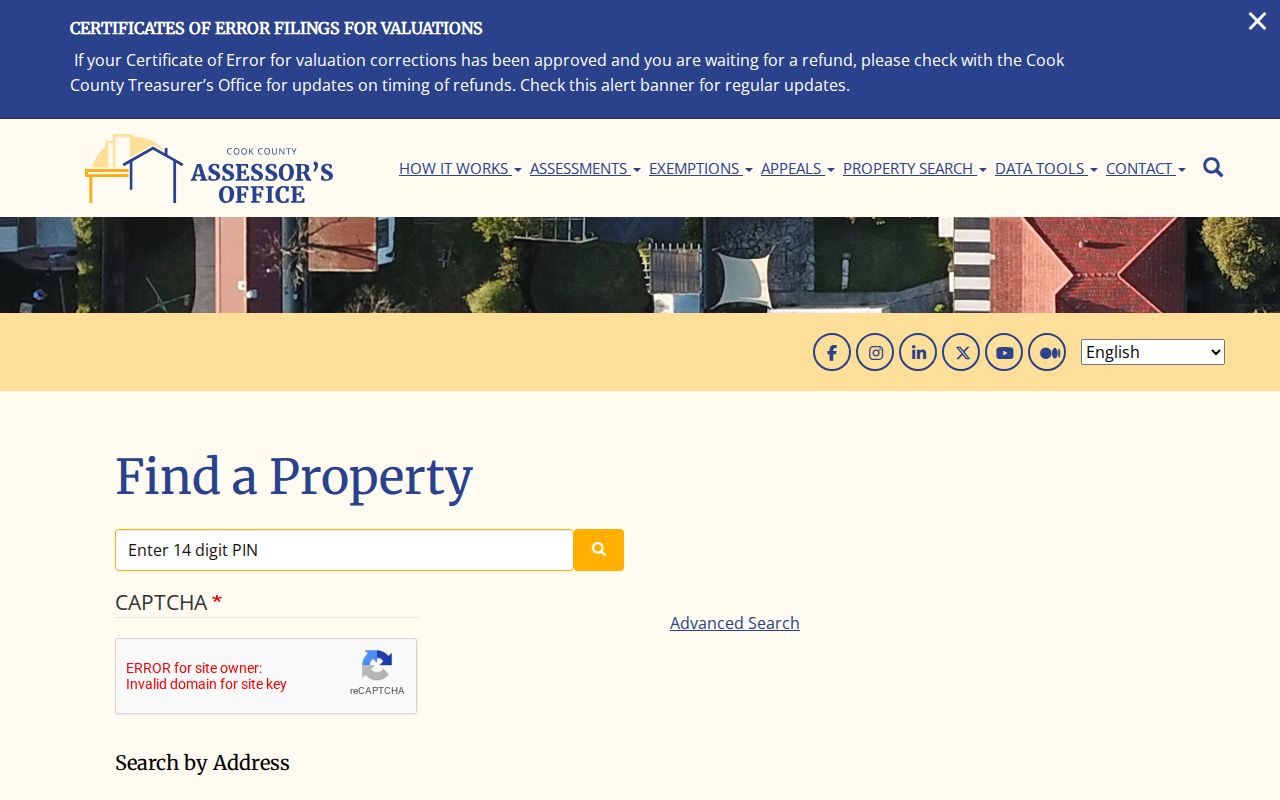
The returned PIN is more durable than a typed street label and can link the assessment record to taxes, GIS, and recordings.
Schaumburg Court Record Lookups
Court records can confirm that a named person appeared in a public case, but a docket is not a current address directory or a statement of guilt. Cook County's Odyssey guide uses a required record number or name in “Last, First Middle Suffix” order. Filters include case type, case status, filing-date range, and judicial officer. Results may show a case number, party, filing date, type, status, and date of birth. Recent entries can lag, and the clerk identifies the courthouse record as official.
DuPage's public portal provides case status, next court date, docket entries, and registration features, although its live search was protected by an interactive check during research. Contact the DuPage Circuit Clerk or use its copy route if the public screen does not work. Cook also provides public-access terminals and copy requests. Juvenile, adoption, sealed, expunged, and other protected material will not appear through an ordinary name search.
The Cook County online case information page is the official starting route pictured below.
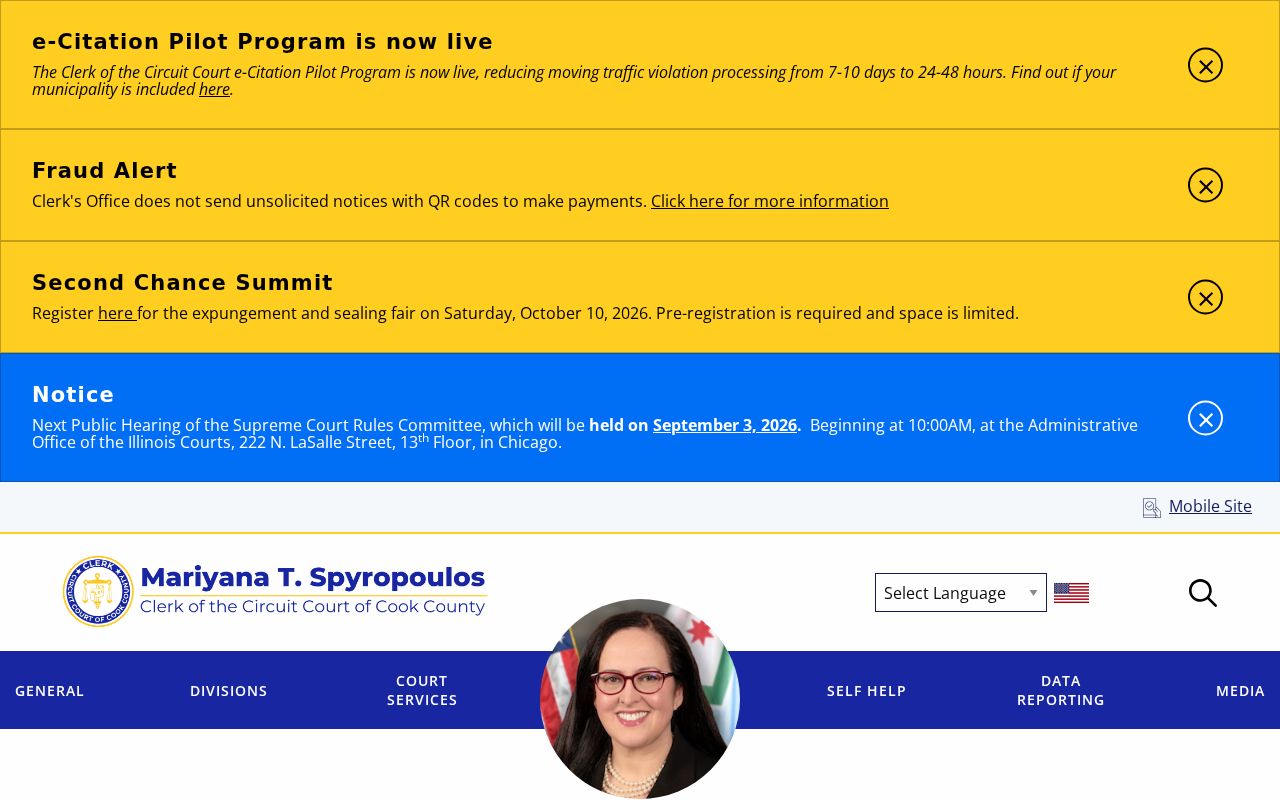
Treat each result as a dated court entry and verify the case number with the circuit clerk.
Current Schaumburg Resident Directories
Current public systems list people only when a law or public function places a name in a record. The assessed owner may appear on a parcel. A deed index names grantors and grantees, the people or entities transferring property. A professional license or business filing can confirm a public role. Voter tools are designed for registration status and polling information, not for compiling neighborhood rosters. Private association member lists and utility, delivery, motor-vehicle, school-student, and library-patron data are not substitutes for public resident rolls.
| Source | Who It Lists | Keeper | Access |
|---|---|---|---|
| Property rolls | Assessed owners | Cook or DuPage assessor | Free online search |
| Voter status | Registration and district details | State and county election offices | Restricted-purpose lookup |
| Recorded documents | Parties to deeds, liens, and mortgages | Cook Clerk or DuPage Recorder | Index online; copies vary |
| Professional licenses | Illinois licensees and entities | IDFPR | Free verification |
| Business entities | Agents and public company roles | Illinois Secretary of State | Individual searches |
Choose the roll that matches the question. An address-to-owner question belongs with the assessor; a deed party belongs with the recording office; a regulated credential belongs with IDFPR. The Schaumburg resident lookup develops the one-name workflow and explains how to avoid merging people who share a name.
Schaumburg Voter Status Limits
The Illinois Online Voter Registration Status tool asks for first and last name, birth date, ZIP, street number, and a street-name selection. DuPage also exposes name, address, and district search routes. These systems help a voter confirm registration and districts, but Illinois restricts broader voter-file access to political or bona fide purposes and prohibits commercial use. Public output should not be republished as a household list.
If the statewide page does not match, check spelling, ZIP, and county, then contact the appropriate election office. A no-result can mean a data mismatch, a recent move, a protected address, or no registration. It does not prove that a person does not live in Schaumburg. The Illinois Address Confidentiality Program supplies a substitute address to qualifying survivors, and agency-specific protections can limit disclosure in other systems.
Verify Schaumburg Licenses
Public professional and business records add an affiliation check without claiming a home address. The Illinois Department of Financial and Professional Regulation lookup accepts a licensee name or license number and can return status, city and state, issue or expiration dates, and a discipline indicator. The Illinois Secretary of State business search can use an entity name, registered agent, president, secretary, manager, file number, keyword, or partial word, depending on the method selected.
The IDFPR screen shown here is useful when a person says they hold an Illinois-regulated credential.
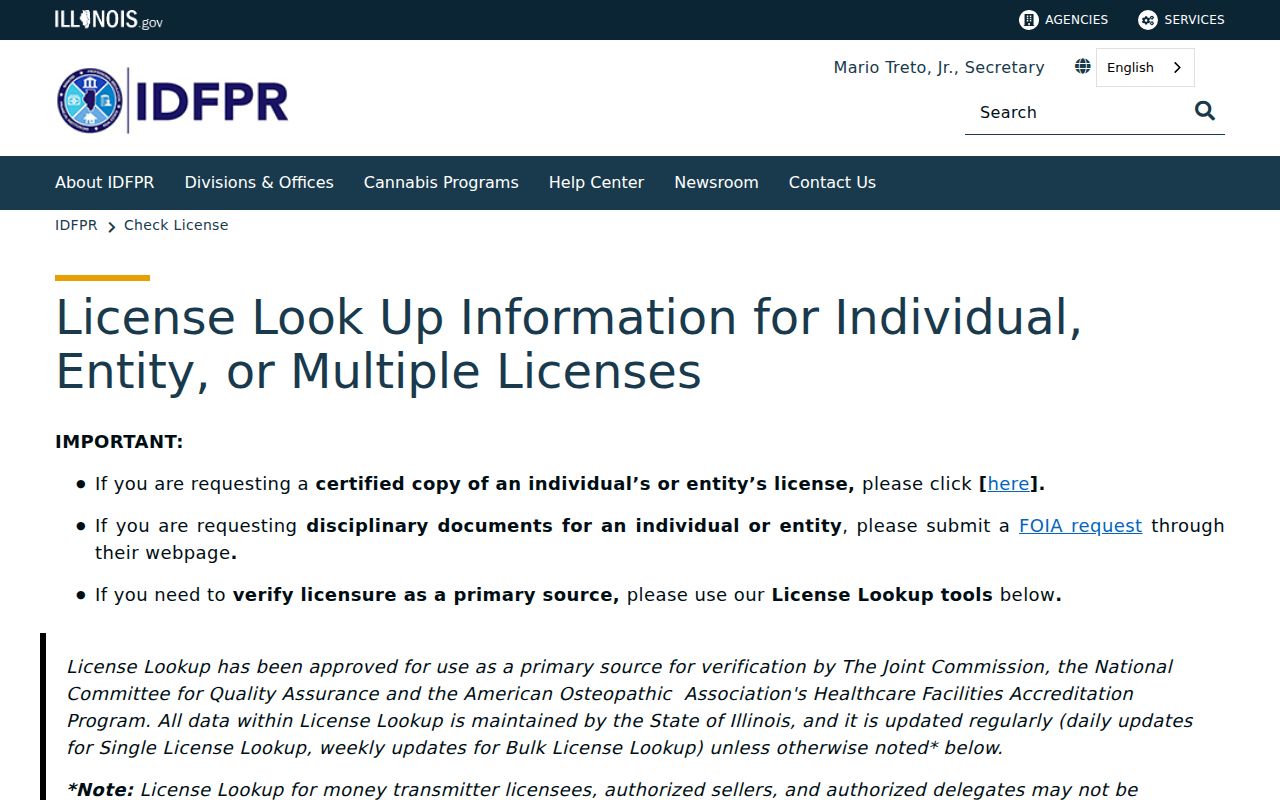
A license result confirms the public credential record, not identity by itself. Match the profession, city, number, and dates before drawing a conclusion.
Schaumburg Records Beyond Portals
Online indexes are only one access channel. Cook court files may require a public terminal or copy form. A recorder can supply an indexed image or certified copy. Vital records use county or state forms with eligibility and identity rules. The Schaumburg Township District Library provides staff help, physical volumes, databases, microfilm, newspapers, and local digital archives. Illinois State Archives and IRAD repositories handle older county-origin material and genealogy requests.
For Village material not already posted, the Schaumburg FOIA Center accepts an electronic request. Illinois FOIA, 5 ILCS 140, generally gives a public body five business days to answer an ordinary request, subject to extensions, exemptions, and fee rules. Describe a record by office, subject, date range, and document type. Ask for an electronic copy when practical. FOIA produces existing public records; it does not require an agency to answer a broad research question or create a new resident list.
- Index
- A finding aid that points to a document or entry.
- Certified copy
- A custodian-issued copy carrying official certification.
- PIN
- The permanent index number used to identify a parcel.
- Criss-cross directory
- A directory arranged by street or telephone number instead of only by surname.
Historical Schaumburg Resident Directories
The Schaumburg Township District Library holds Chicago Telephone, Chicago Suburban, regional telephone and criss-cross books, and Haines directories. Its local guide identifies Schaumburg and Hoffman Estates volumes for many years from the 1980s forward, while reporting a missing local telephone-book run from 1960 through 1981. A 1960/61 Illinois White Pages scan at the Library of Congress helps bridge that period, although its OCR and locality abbreviations require care. “Schmbrg Cntr,” “Hofmn Ests,” and “Rosel” can appear where a modern searcher expects full place names.
A directory entry is evidence for one publication period, not proof of a present household. Pair it with deeds, tax records, census schedules, newspapers, obituaries, yearbooks, church registers, and probate when appropriate. Ask the library Reference Desk about fragile or non-circulating volumes and staff-assisted access. The Schaumburg city directory collections page lists the shelf by era and explains how to read its entries.
Schaumburg's 1890 Records Gap
The most important missing record is national, not a local courthouse loss. The 1890 federal census schedules were destroyed after the 1921 Commerce Department fire. That gap matters to Schaumburg family research because a person can vanish between surviving census years. Directories, deeds, tax books, probate, church registers, newspapers, and naturalization files become the bridge.
The State Archives genealogy route explains county-origin records and IRAD access. Library sources add the local layer, including Lutheran and United Church of Christ records, newspapers, yearbooks, obituaries, maps, and telephone directories. Search historic place forms such as Schaumburg Centre as well as Schaumburg. Cite each substitute source separately so a family link is based on several dated facts, not on a single matching surname.
Protect Schaumburg Record Searches
Public record detail can attract scams. Verify unexpected deed, permit, court, or payment messages through the official office URL or a published phone number. Cook County offers a free Property Fraud Alert for recording activity, and the Illinois Attorney General explains why owners should monitor genuine notices rather than pay a solicitor that claims to prevent title theft. A 2026 state alert also warned about fake traffic-violation texts seeking payment or personal information.
Use the Schaumburg residents directory for lawful personal research, genealogy, civic transparency, reconnecting, estate work, and fraud checks. Stop when an address is protected or a record cannot be verified. Never use public detail to stalk, harass, intimidate, or harm someone. Commercial people-search results can be stale, merged, or incomplete; an official custodian and a second matching record are safer than a broad data profile.
Note: Save the exact office URL and access date with each result because portals, facilities, fees, and record coverage can change.